
Bearing Witness Without Breaking
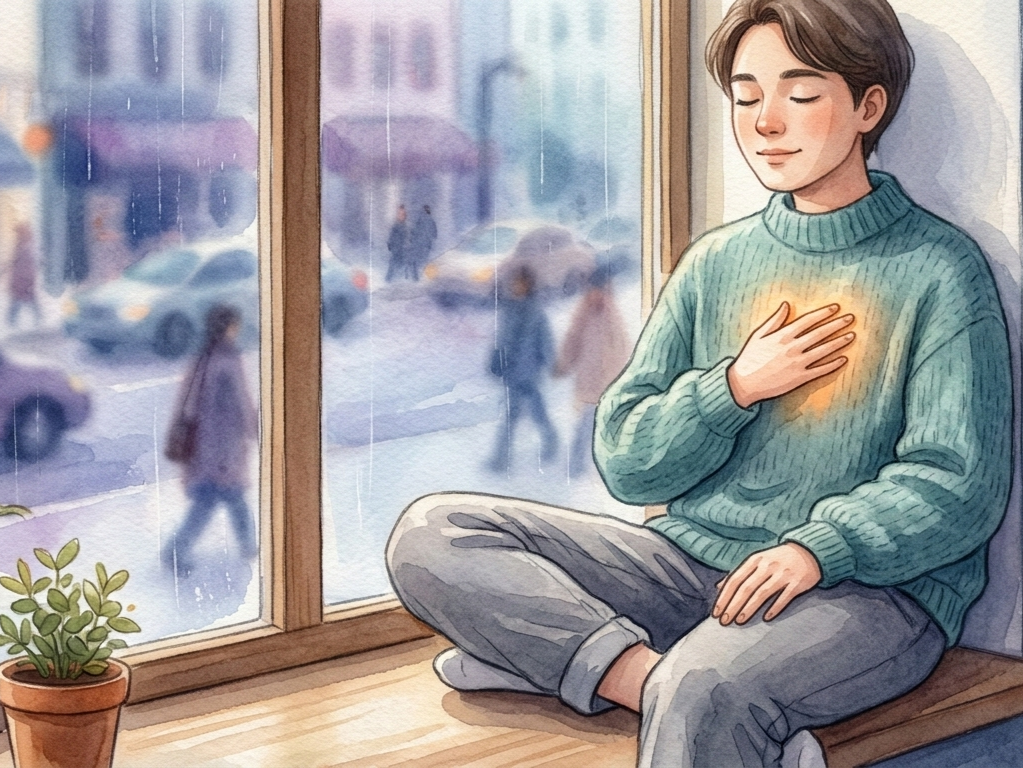
It feels like the world is always "on" lately. Every time we pick up our phones, we see headlines about hard things happening to people near and far. If you are a sensitive person or an autistic person, you might feel this even more deeply. You want to look. You want to show up. You want to be there for others. This act of staying present and acknowledging someone else's struggle is called bearing witness. It is a beautiful, deeply human thing to do.
But have you noticed how heavy it feels? Sometimes, after scrolling through news or listening to a friend's pain, you might feel shaky, tired, or even numb. It’s hard to balance your desire to care with your need to stay okay. You might wonder if you’re doing something wrong because you feel so drained.
Please know that your feelings are normal. We aren't built to carry the weight of the entire world on our shoulders all at once. Learning how to manage the trauma impact of these events is not about caring less. It is about building resilience so you can keep your light shining without burning out.
Key Takeaways:
Bearing witness means acknowledging the truth of someone’s pain without looking away.
Watching hard events can affect your nervous system just like a physical injury.
You can use simple body-based tools to stay grounded and protect your well-being.
Bearing Witness
To bear witness means to be present for a difficult truth. It is the act of saying, "I see what is happening, and I recognize your pain." It is a way of showing solidarity and making sure people aren't suffering in silence. In our digital world, we often bear witness through videos, articles, and social media posts.
This matters because being seen is a basic human need. When we acknowledge the truth, we help create a world built on empathy and honesty. However, seeing constant suffering can take a toll on our minds and bodies. Bearing witness is a powerful act of love, but our nervous systems need breaks to process the heavy emotions we take in.
Why It Matters
When we see scary or sad things, our bodies don't always know the difference between what is happening on a screen and what is happening in front of us. This can lead to something called secondary trauma. This is when you feel the symptoms of stress even though the "bad thing" didn't happen to you directly.
You might notice these signs:
Feeling "wired" or unable to sleep.
Feeling "checked out" or like you're in a fog.
A heavy feeling in your chest or stomach.
Getting angry or tearful more easily than usual.
Normalizing these reactions is the first step toward self-care. You aren't "too sensitive." You are simply human, and your body is trying to protect you from the stress it sees.
Building Resilience for Yourself
Your nervous system has a "safety switch." When we see trauma, that switch flips to "danger." We can use tools from Polyvagal Theory—which is just a fancy way of saying "the science of how our bodies feel safe"—to flip the switch back to "calm."
1. The "Cool Down" Trick
When you feel overwhelmed by the news, splash cold water on your face or hold an ice cube in your hand. This sends a quick signal to your brain to slow down your heart rate. It pulls you out of a "panic" state and back into the present moment. Using temperature is a fast-pass to calming your nervous system when the world feels too loud.
2. The Long, Slow Exhale
Try breathing in for a count of four, but breathing out for a count of eight. Making your exhale longer than your inhale tells your body it is safe to relax. It’s like giving your internal engine a break. A long exhale is a physical "off-switch" for the stress chemicals in your blood.
3. Seek "Heavy" Comfort
If you feel floaty or anxious, find something with weight. This could be a weighted blanket, a heavy coat, or even just pushing your feet firmly into the floor. This "proprioceptive input" helps your body feel where it ends and where the world begins. Feeling your own weight helps you stay inside your own body when empathy tries to pull you away.
Supporting Someone Else
Sometimes, you aren't the one watching the news—you are the one listening to a friend who is hurting. You can bear witness to them without losing yourself. Or matching their… by matching their.. anxiety level or mood.
Practice Co-Regulation
You don't need to have the perfect words. Often, just sitting quietly and keeping your own breath steady helps the other person feel calmer. This is called co-regulation. It means your "calm" helps their body find "calm" too. Your steady presence is more healing than any advice you could give.
Set Gentle Boundaries
It is okay to say, "I really want to be here for you, but I'm feeling a bit overwhelmed right now. Can we talk more about this in an hour?" This teaches both of you that self-care is a part of a healthy relationship. Setting a boundary isn't a "no" to your friend; it is a "yes" to your ability to keep supporting them long-term.
Moving Forward with Compassion
Bearing witness to the world’s pain is a brave thing to do. It shows that you have a big heart and a deep sense of justice. But remember, you cannot pour from an empty cup. Building resilience isn't about ignoring the world; it's about making sure you are strong enough to keep looking when it matters most.
Be gentle with yourself today. You are doing the best you can with a lot of information. If things feel too heavy, it’s okay to look away for a while. The world will still be here when you’ve had a chance to breathe.
Take the Next Step
If you’re feeling overwhelmed and want to find better ways to cope:
Visit our website atCaretta Counseling to see how we help people navigate stress.
Learn more about our services, including how we support neurodivergent individuals and those managing trauma.
Schedule a free 15-minute consultation with us today to start your journey toward feeling more grounded.
This is for informational purposes only and is not a substitute for professional therapy. If you are experiencing a mental health crisis, contact your local crisis center or the National crisis hotline at 988.
References
American Psychological Association. (2022). Building your resilience. * Dana, D. (2018). The Polyvagal Theory in Therapy: Engaging the Rhythm of Regulation. W. W. Norton & Company.
Porges, S. W. (2017). The Pocket Guide to the Polyvagal Theory: The Transformative Power of Feeling Safe. W. W. Norton & Company.
Dr. James Kuhn (He/Him) is a Doctor of Psychology (2025) who specializes in trauma, anxiety, and depression, with a focus on LGBTQIA+ and neurodivergent communities.
Drawing on DBT, CBT, and a creative, person-centered approach (think Dungeons & Dragons character creation),
he helps adults uncover the tools they already have to become the version of themselves that feels right.
