
Neurodiversity and the Holidays: Managing Stress and Setting Boundaries
The holidays are supposed to be magical. But for many autistic people and those with ADHD, this time of year can feel overwhelming instead of joyful. Between sensory overload, social expectations, and routine disruptions, the holidays present unique challenges for neurodiverse individuals. You're not broken if the holidays feel hard. Your brain just processes the world differently, and that's okay. Let's talk about why the holidays can be tough and what you can do to take care of yourself.
Key Takeaways
Holiday stressors like sensory overload, schedule changes, and social demands can be especially challenging for neurodiverse people
Planning ahead with specific strategies can help you manage holiday stress
Setting boundaries and communicating your needs is an act of self-care, not selfishness
Why the Holidays Can Feel Extra Hard
Sensory Overload Everywhere
The holidays bombard your senses from every direction. Flashing lights, crowded stores, strong food smells, scratchy holiday sweaters, and constant background music can be exhausting. For autistic people who experience sensory sensitivities, this isn't just annoying—it can be physically painful or trigger meltdowns.
People with ADHD may also struggle with sensory input during the holidays. All those competing stimuli make it harder to focus and can increase feelings of restlessness or anxiety.
Your Routine Gets Thrown Out the Window
Many neurodiverse people rely on routines to feel grounded and manage daily tasks. The holidays disrupt everything: meal times change, sleep schedules shift, work routines pause, and every day feels unpredictable.
For people with ADHD, losing structure can make executive functioning even harder. It becomes more difficult to remember tasks, manage time, or complete basic activities.
Social Expectations Feel Like a Performance
Holiday gatherings often come with unspoken rules about socializing, gift-giving, and "being cheerful." Autistic people may find these social expectations confusing or exhausting, especially when masking (hiding autistic traits to fit in) for extended periods.
People with ADHD might worry about interrupting conversations, forgetting social cues, or appearing distracted when relatives are talking. The pressure to be "on" socially for hours can drain your energy completely.
Decision Fatigue and Executive Function Demands
The holidays require constant decision-making: What gifts to buy? What to cook? What to wear? Where to go? For people with ADHD, this decision overload can lead to paralysis or last-minute panic.
Planning, organizing, and following through on holiday tasks require strong executive functioning—skills that are often challenging for neurodiverse people.
Strategies to Prepare for Holiday Stress
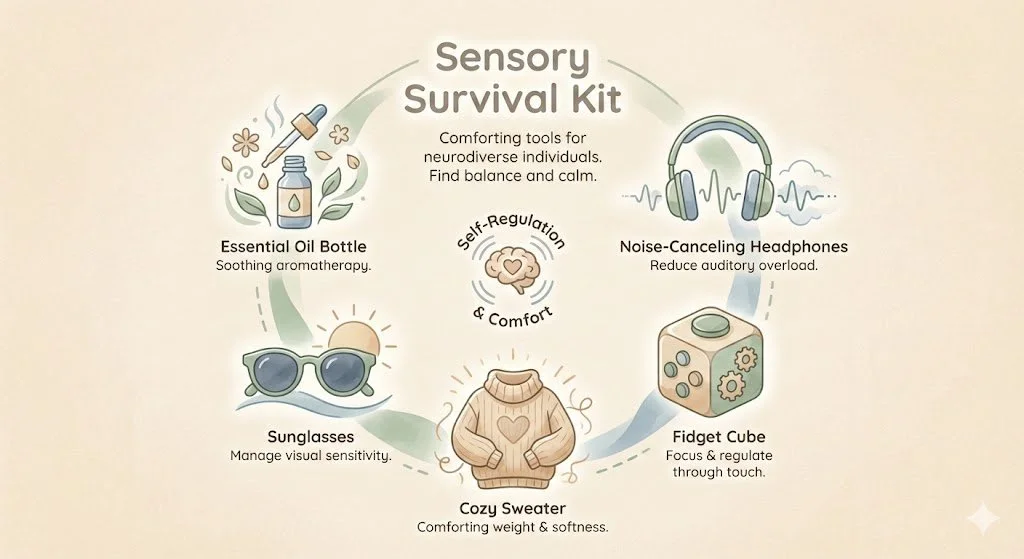
Create a Personal Sensory Survival Kit
Pack items that help you regulate when things get overwhelming:
Noise-canceling headphones or earplugs
Fidget tools or textured objects
Comfortable clothing (keep soft layers handy)
Sunglasses for bright lights
Your favorite calming scent or essential oil
Give yourself permission to step away. Find a quiet room, take a walk outside, or sit in your car for a few minutes when you need a break.
Build in Structure Where You Can
You can't control everything, but you can create small pockets of predictability:
Keep your morning routine the same, even on holidays
Schedule specific times for activities rather than leaving the day open-ended
Set alarms or reminders for important tasks
Plan ahead for meals and sleep, maintaining consistency when possible
Use visual schedules or checklists to track holiday tasks
For people with ADHD, breaking big tasks into tiny steps helps prevent overwhelm. Instead of "buy gifts," try "make gift list," "buy gift for Mom," "wrap gift for Mom."
Set Boundaries Before You Need Them
Decide your limits ahead of time and communicate them clearly:
"I can stay for two hours, then I'll need to head home"
"I'm happy to attend, but I'll need to take breaks in a quiet space"
"I'm celebrating differently this year and won't be able to make it"
You don't owe anyone a detailed explanation. Simple, kind statements work: "That won't work for me, but I appreciate the invitation."
How to Support Someone Who Is Neurodiverse
Ask Instead of Assuming. Everyone's needs are different. Ask the neurodiverse people in your life: "What would make this gathering more comfortable for you?" or "How can I support you during the holidays?" Respect their answers without judgment, even if their needs seem unusual to you.
Create Sensory-Friendly Spaces. If you're hosting:
Designate a quiet room where people can retreat
Offer headphones or let guests know they're welcome to use their own
Keep lighting softer and avoid strobe effects
Reduce strong fragrances (candles, perfumes, air fresheners)
Provide food options and don't pressure people to eat specific things
Flexibility is a gift. Let neurodiverse guests participate in ways that work for them, whether that means arriving late, leaving early, or engaging differently than others.
Respect Communication Differences. Some autistic people prefer written communication over phone calls. Some people with ADHD might forget to respond to messages but still care deeply. Don't take communication style personally.
Give clear, direct information. Instead of "We're getting together sometime next week," try "Dinner is at 6 PM on Thursday, December 21st at my house. You can arrive anytime between 5:30-6:30."
You Deserve to Enjoy the Holidays Too
The holidays don't have to look a certain way to be meaningful. If traditional celebrations don't work for your brain, create new traditions that do. Maybe that means a quiet dinner instead of a big party. Maybe it means celebrating on a different day when things are calmer. Maybe it means saying no to some events so you can truly enjoy others.
Your needs are valid. Taking care of yourself isn't selfish—it's necessary. The people who truly care about you will understand and support the accommodations you need.
Remember, you're not alone in finding the holidays challenging. Many neurodiverse people experience exactly what you're feeling. Be patient with yourself, plan ahead where you can, and know that it's okay to do the holidays your way.
Ready to Get Support?
At Caretta Counseling, we understand the unique experiences of neurodiverse individuals. Our affirming therapists can help you develop personalized strategies for managing holiday stress and navigating life's challenges year-round.
Visit our website at www.carettacounseling.com to learn more about our services or contact us to schedule a free 15-minute consultation.
Disclaimer: This is for informational purposes only and is not a substitute for professional therapy. If you are experiencing a mental health crisis, contact your local crisis center or the National crisis hotline at 988.
